 Website Designing
 Web Development
 Mobile Applications
 Marketing
 CMS & Ecommerce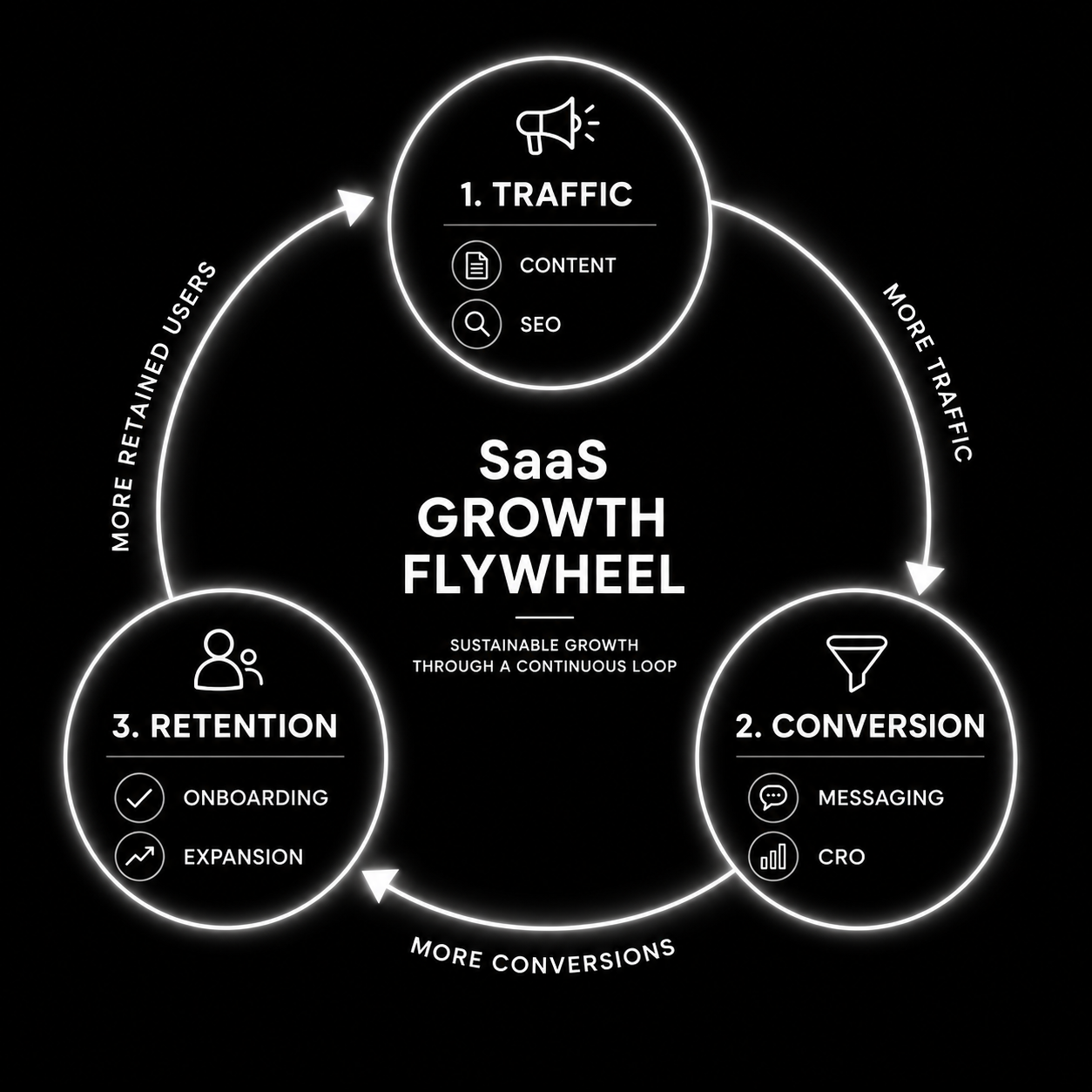
Most SaaS marketing sites are digital brochures. Beautiful, yes. Strategic? No. They sit at the top of the funnel, generate a few qualified leads per month, then rely on paid ads and outbound to fill pipeline.
The top 10% of SaaS websites are built as compounding systems. Content attracts organic traffic. Layout and copy convert visitors to qualified leads. Onboarding and activation convert trials to paying customers. Each loop feeds the next. Year-over-year, the machine gets more efficient, not less.
This guide covers how to shift your site from brochure to lead engine. The three loops. The metrics that matter. How to prioritise.
The Three Loops of a SaaS Growth Flywheel
Loop 1: Traffic Loop (Content + SEO)
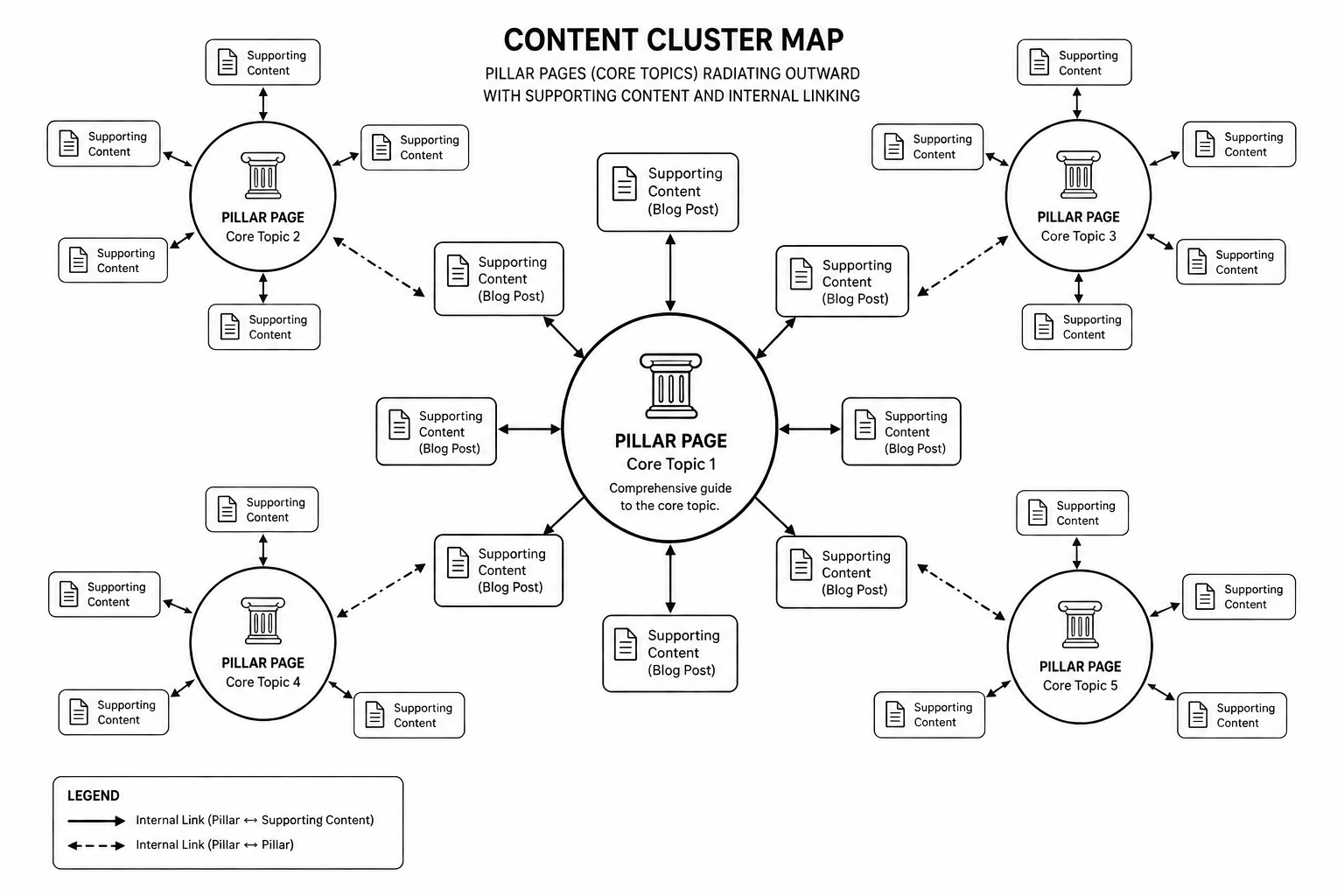
Publish topical content clusters around primary keywords. Each blog post links to product pages. Each product page links to related blogs. Internal link structure compounds. Organic traffic grows month-over-month without paid spend.
Metrics: +10–20% organic traffic per quarter is achievable with consistent content. Better if you’re starting from low baseline.
Tools: Semrush, Ahrefs for keyword research. Content management system with editorial SEO tools. See our CRO playbook for content strategy.
Loop 2: Conversion Loop (Messaging + CRO)
Visitors arrive. Layout, copy, and CTA clarity convert them to qualified leads. Not all traffic is equal. Organic traffic from high-intent keywords converts 3–5x better than paid traffic from cold audiences.
Metrics: +0.5–2% conversion rate improvement per quarter is achievable. Compounded over 12 months, that’s 20–30% lifetime improvement.
Tools: Hotjar or Clarity for session recording. Figma for design iteration. Analytics tools to segment traffic by source and intent.
Loop 3: Retention Loop (Onboarding + Expansion)
Customer signs up. Onboarding and activation direct them to first value. Early success triggers expansion moment. Existing customer reaches for upsell. Customer lifetime value increases. Word-of-mouth and referrals bring inbound interest.
Metrics: +10% retention month-over-month on a cohort. +5–10% expansion revenue per paying customer annually. 20–30% of new customers from referral/word-of-mouth.
Tools: Product analytics (Amplitude, Mixpanel). Email marketing (HubSpot, Klaviyo) for lifecycle campaigns. In-product messaging (Appcues, Userpilot) for onboarding nudges.
The Three-Phase Roadmap
Phase 1 (Months 1–3): Foundation
- Audit current website. What converts? What doesn’t?
- Lock positioning and messaging. Consensus on value prop.
- Build content calendar for 12 months (pillar + supporting content).
- Implement basic CRO (form field reduction, CTA clarity).
Phase 2 (Months 4–9): Acceleration
- Publish 8–12 high-quality posts (one per week).
- Build content cluster linking structure.
- Ship 3–5 CRO experiments per month.
- Instrument product for onboarding + conversion tracking.
Phase 3 (Months 10–12): Compounding
- Content traffic reaches 50%+ of total visits.
- Conversion rate improved 20–30% from baseline.
- Onboarding and expansion workflows live.
- Referral loop producing 15–25% of new customers.
Common Mistakes That Slow Growth Loops
1. No content strategy. Publishing randomly doesn’t build traffic. Fix: pillar/cluster strategy with 12-month roadmap.
2. Slow CRO iteration. One A/B test per quarter doesn’t move numbers. Fix: 3–5 experiments per month, measure ruthlessly.
3. Product not optimised for conversion. Website drives leads. Product doesn’t activate them. Onboarding leaks 40%. Fix: instrument product, run onboarding experiments.
4. No expansion motion. Customer signs up, gets value, stays flat. No upsell, no expansion, no referral trigger. Fix: map expansion workflow, ship lifecycle campaigns.
5. Paid ads as a crutch. Heavy paid ad spend masks broken organic. Fix: organic foundation first, paid as accelerant later.
For the full conversion optimization playbook, see the CRO playbook. For SaaS landing page specifics, see SaaS landing page optimization.
Ready to build a SaaS growth flywheel? Our growth strategy team maps the three loops for your business and prioritises Phase 1. Book a strategy call.
FAQ
What’s a realistic timeline to see results from a growth flywheel?
Phase 1 (foundation): 3 months, minimal visible change. Phase 2 (acceleration): 6 months, 2–3x traffic improvement and 20% conversion lift. Phase 3 (compounding): 12+ months, 10x traffic, 3x leads, real referral engine.
Should I hire an agency for this or do it in-house?
Hybrid works best: agency builds strategy and trains team, team executes and iterates. Pure in-house works if you have content + CRO + product analytics depth. Pure agency usually costs more and moves slower.
What’s the fastest way to see results?
Conversion optimization (Loop 2). A 2% conversion rate improvement shows in the same month. Content (Loop 1) takes 3–6 months to show. Start with quick CRO wins while content seasons.
How do I measure if my growth flywheel is working?
Track monthly: organic traffic, demo requests, qualified leads, trial signups, paying customers, LTV. You should see each increase 15–25% month-over-month if loops are tight.
Can I build a growth flywheel without a dedicated content team?
Yes, if you repurpose founder/product leader content and outsource writing. But consistency matters. One post per week beats five posts per month. Sustainable pace beats sporadic output.
Conclusion: Flywheels Beat Ad Spend
The SaaS companies growing fastest in 2026 aren’t the ones with the biggest ad budgets. They’re the ones with the tightest flywheels. Content attracts. Conversion takes. Product activates. Expansion drives. Loop repeats. More efficient every cycle.
Build the flywheel. It takes 12 months. By month 18, you have a customer acquisition machine that works with zero paid ads.
Our growth strategy team builds SaaS flywheels. Book a strategy call if you want expert roadmapping.
The SaaS Website Growth Playbook
— the full 90-day roadmap for launching your three-loop flywheel with content, CRO, and onboarding milestones.